Trenton "TJ" Nalls
Designing Games to be Fun
This past semester, in my Introduction to Game Design course, we were tasked with making small games, usually with cards. The third time we were tasked with making such a game, we were specifically instructed to consider the fun in our games. Before, a game that was simply functional was sufficient, but now, we had to make something fun.
It seems simple enough. If you're making a game, you want it to be fun, right? However, that raises a couple questions. What exactly is fun? Why is the game I'm making fun? For this third game, we had to find answers to these types of questions to succeed.
The Challenge
For this assignment, there were a number of requirements that defined what type of game we needed to make. Notably, the game had to include a specific theme, a specific mechanic, it had to be single player, it had to be fully playable in 20 minutes or less, it had to be fun, and most importantly, we as developers had to be able to explain why our game was fun.
What Is Fun?
As a class, before we divided into our small groups, we discussed what it is that makes things fun. The answer we came up with, thanks to the help of our professor, was a combination of risk and reward. With this knowledge, we now had to make a game that embodies this idea of fun.
The Theme
Each of the games we designed for the course had to follow a particular theme. Because the game was being made in October, the theme for this game was "Halloween-Themed Dungeon Crawler". This was another necessary component of the game that we had to take into account.
The Mechanic
In addition, each of the games for the course except for the final one had to be designed with at least one specific mechanic in mind. For this third game, that mechanic was the move-through-deck mechanic, a fairly uncommon mechanic many of us hadn't experienced at that point.
The Game
The game my partner and I came up with is called Monster Mansion Mayhem. In this game, you play as a trick-or-treater who finds themselves locked in a spooky mansion with a bunch of scary monsters. However, the mysterious aura of the mansion itself transforms your costume into the real deal. You must explore the mansion and fight the monstrous denizens of this mansion in order to find the keys necessary to escape.
To play it, you must first select one of the four costumes. From there, draw from the mansion pile. If it's a monster, you must fight it. If you defeat it, draw from the loot deck and send the monster to the graveyard. You can use the candy you get from the loot deck to aid you in battle, but you can only carry seven items total and only one can be used per encounter. If it's an event, you follow the instructions on the card and send it to the graveyard. If you run out of cards in the mansion deck, you shuffle the graveyard and continue playing. To win, you must find the three keys in the loot deck and then find the front door event.
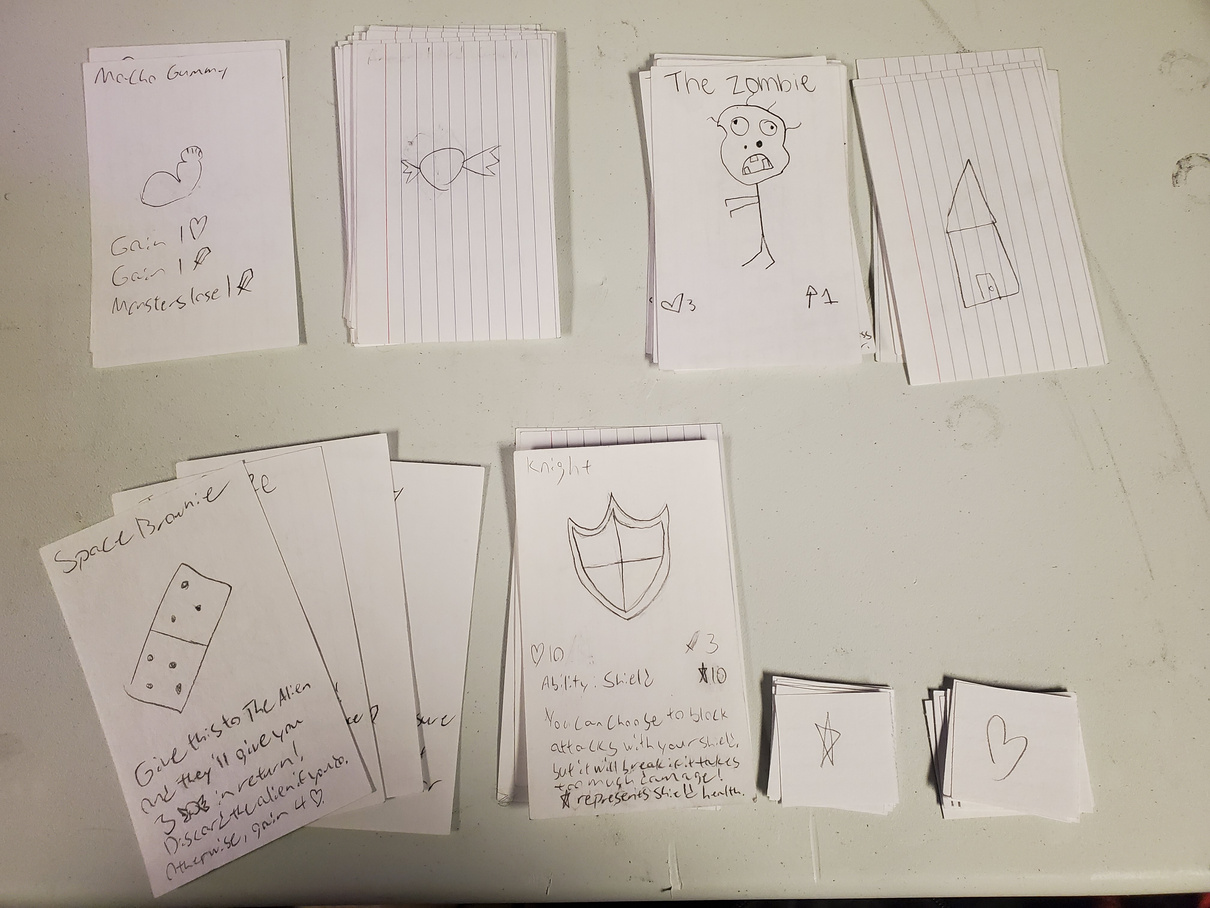
A sample of what the game looks like while being played. From left to right and top to bottom, there is the discard pile, the loot deck, the mansion deck, the graveyard, the player's hand, the costumes, the ability tokens, and the health tokens.
The Risk
We designed the mansion deck as the main thing controlling the risk of the game. What you encounter and in what order plays a big role in the game's difficulty, because it decides what risks you have to take and when you get rewarded for them.
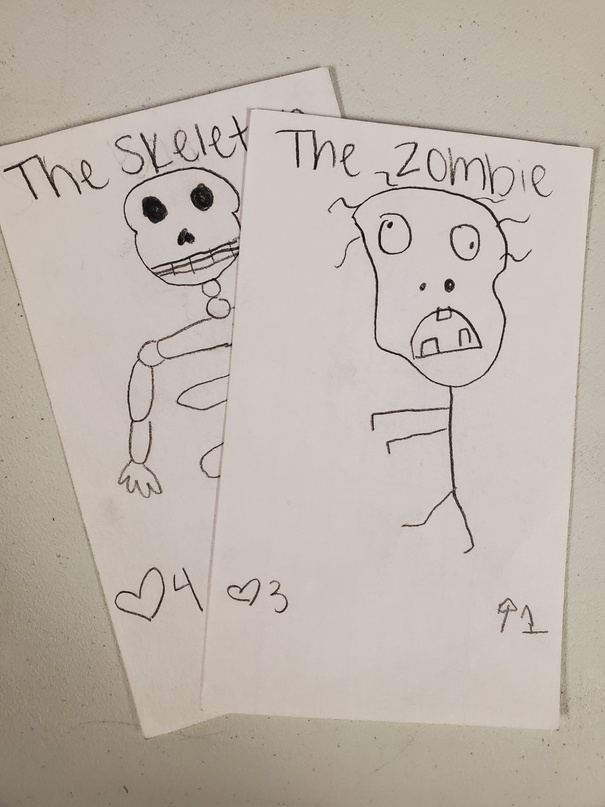
Regular Monsters
These are fairly basic monsters which drop one piece of candy on defeat. They're the typical mansion encounter, and you'll be seeing them frequently. Fairly low risk, fairly low reward.
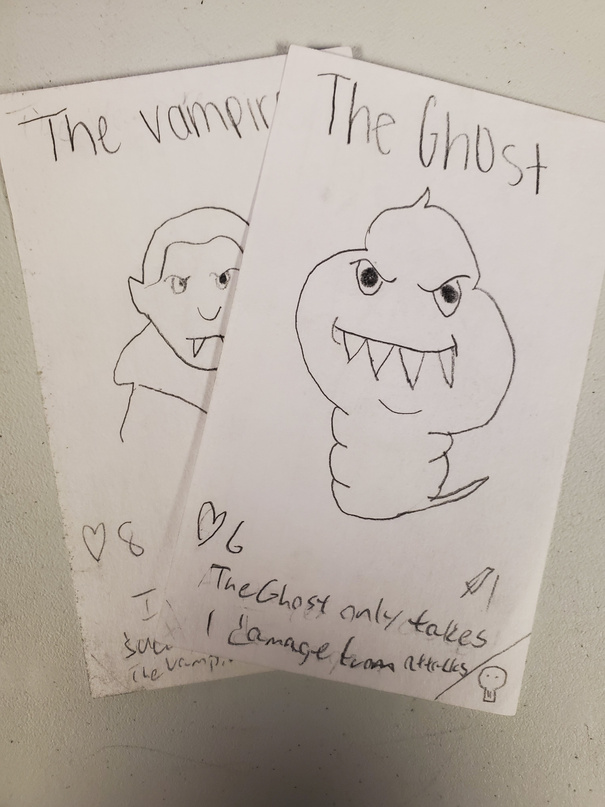
Boss Monsters
These are tougher monsters which usually have some kind of special mechanic exclusive to them. Because they're so tough, they drop two pieces of candy. Higher risk, higher reward.
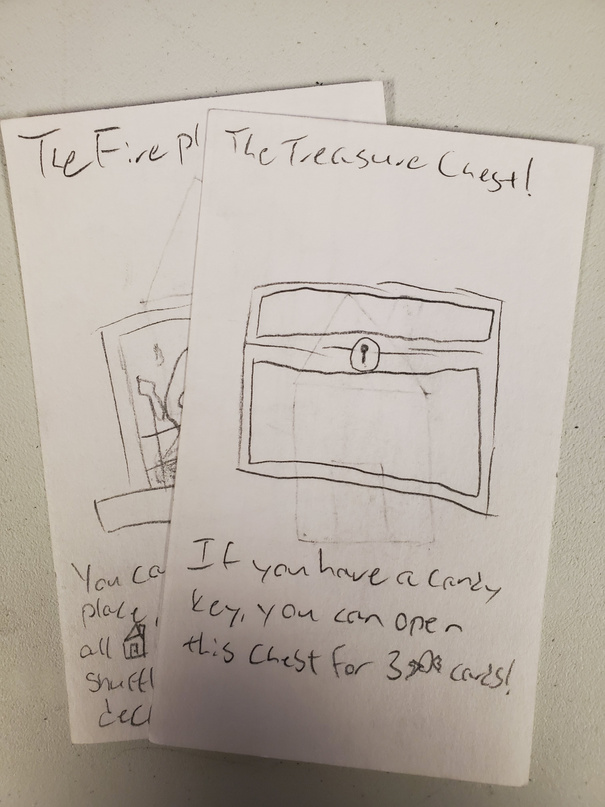
Mansion Events
These events give you a break from the fighting and often require that the player either make a decision or have certain loot. The risk and the associated reward varies.
The Reward
We used the loot deck to control the game's length and to serve as the primary reward. However, it also affects risk because the longer you play, the less loot you have to sustain yourself, and you have to consider which loot you want to keep.
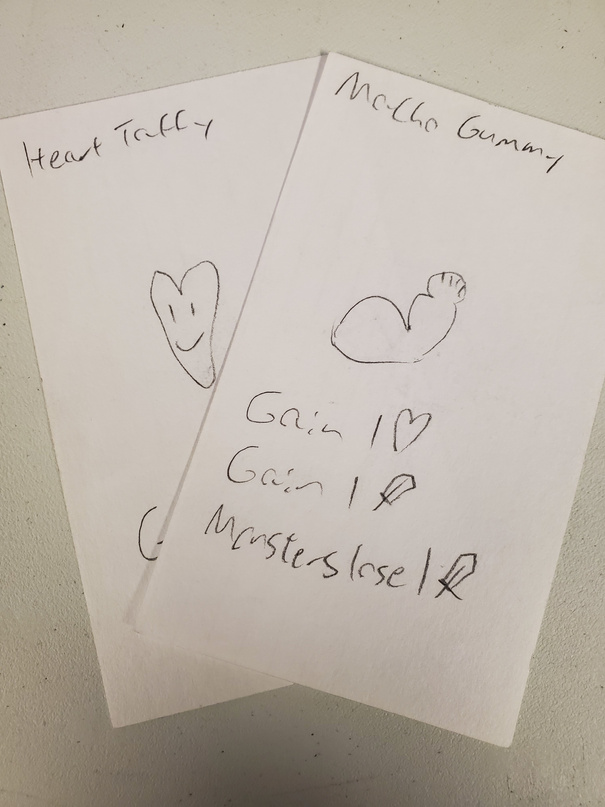
Magic Candies
These candies serve to aid you as you explore the mansion and fight monsters. They can heal you, increase your damage, make you take less damage, and more.
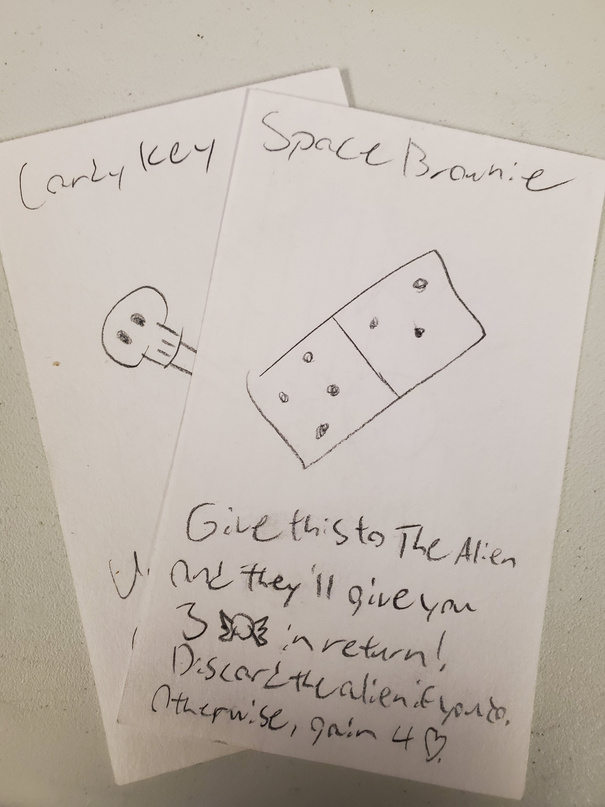
Boss Candies and Candy Keys
These candies are rarer and serve a specific purpose. The boss candies make certain boss monsters easier, and the candy keys can be used in a particular event to get more loot.
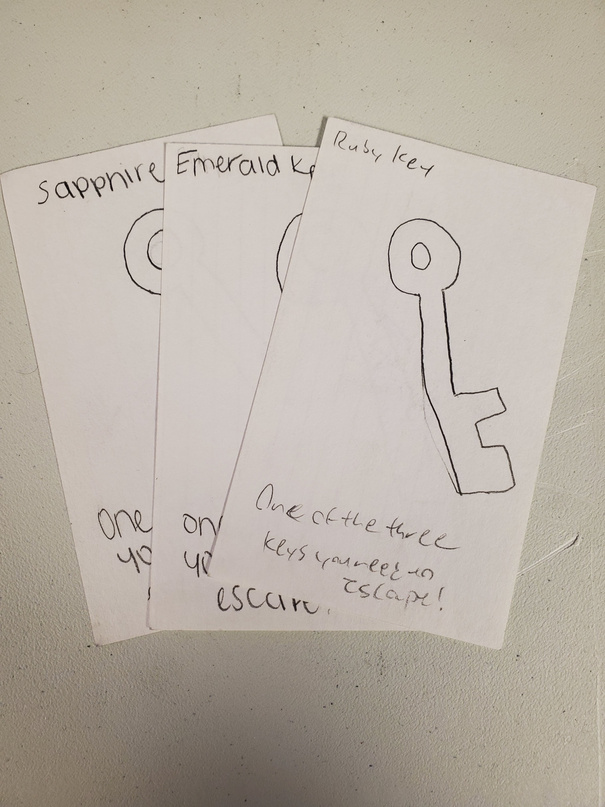
The Gem Keys
These three essential items are what you need to beat the game. How quickly you can acquire these keys largely determines how long the game lasts.
The Player
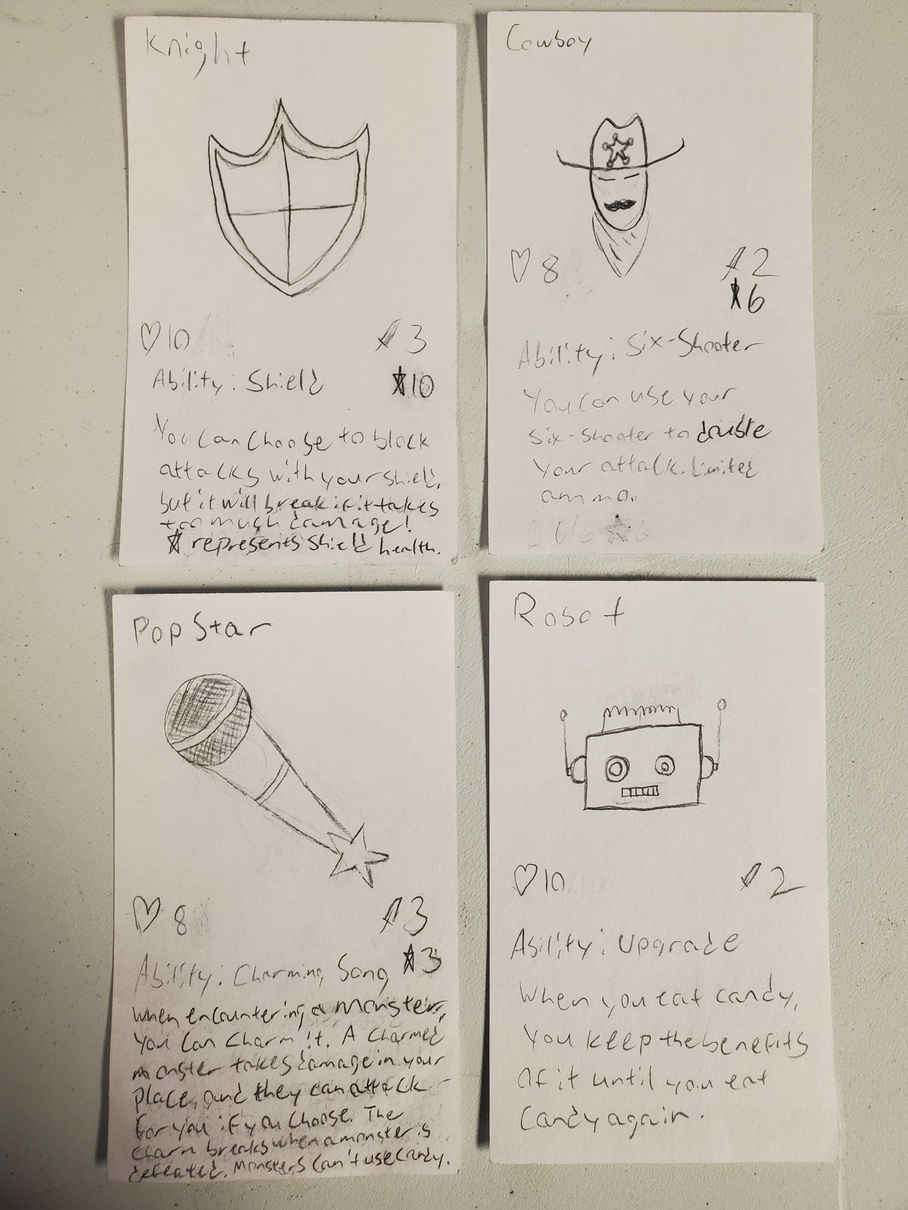
Decision Points
I believe that a vital way to introduce more risk and reward to a game is with decisions. Perhaps the biggest decision point in this game is the costume you select at the start.
The Knight
Likely the simplest character, with higher starting health and attack. She carries a shield with her that functions much like a secondary health bar.
The Cowboy
He starts with lower health and lower attack, making him a bit riskier to play, but he has a six-shooter that lets you do double damage.
The Popstar
Riskier like the cowboy because of the lower health and damage, but she trades the gun for a charm that lets her use monsters like bodyguards.
The Robot
He, like the knight, has higher starting health and attack, but instead of eating candy normally, they use it to upgrade themselves for lasting buffs.
Decisions on Decisions
Should you save the shield's durability or block now? Should you end the fight now with the revolver or save the ammo? Is this monster worth charming or is there a better bodyguard on the way? Should I save my current buff or eat more candy to get health back?
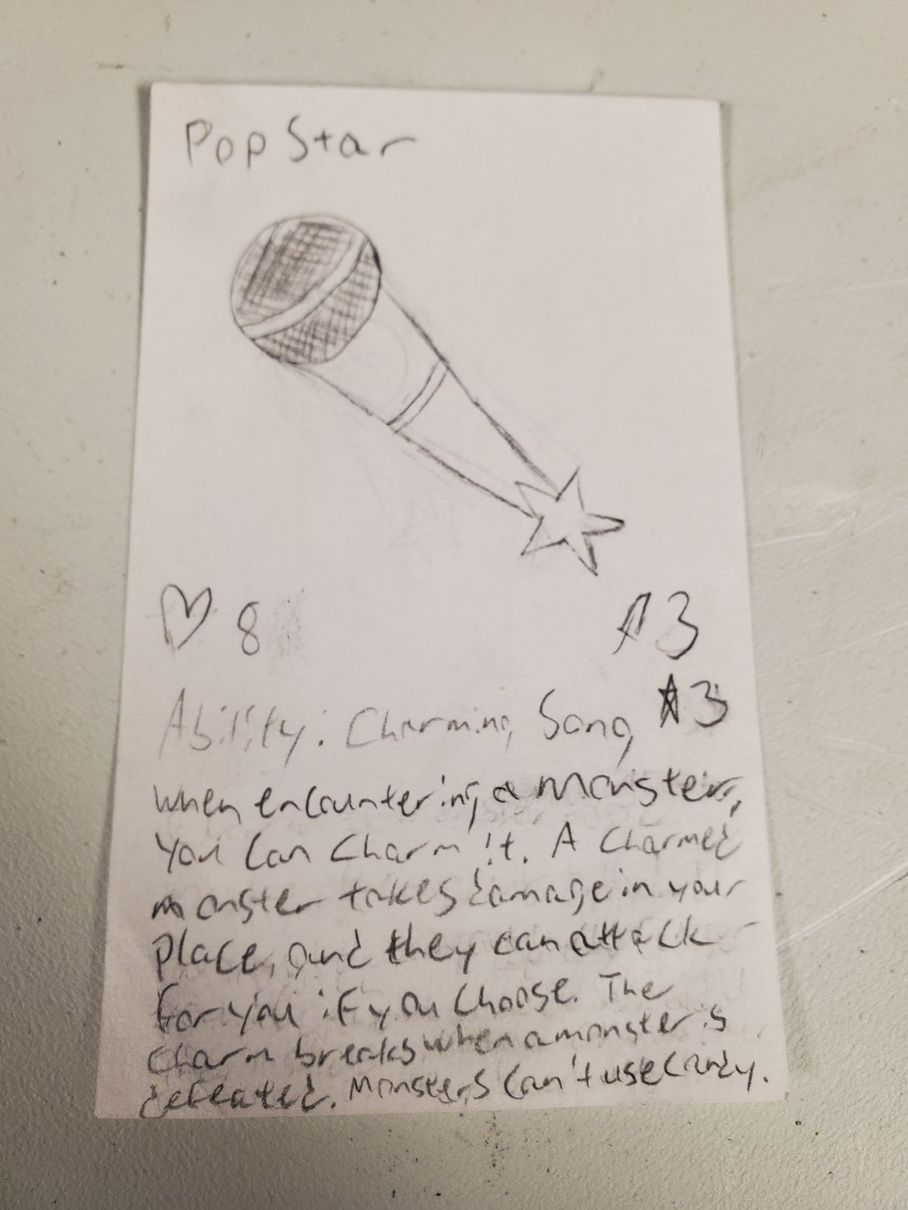
The Popstar Costume. If you look closely, you'll see eraser marks behind the Ability description.
The Fun
For the sake of fun, a few things had to change during development. Namely, I found that the Popstar was too powerful because of their ability. There were no limitations, so I could charm a boss, use it to fight another boss, then easily defeat the weakened winner. Obviously, this removes a lot of risk from the game, making it less fun, so this needed to change. My original idea was to make it so that boss monsters couldn't be charmed, but that solution doesn't solve the actual problem, infinite use. If you don't have a monster charmed, what was the point of not charming the next monster you encounter? Instead, the solution I decided on was imposing a limit on the number of times you can use the ability. This actually solves the problem by introducing a new decision point. Why not charm the next monster you encounter? The reason is that uses are limited and you might find a better opportunity later. Another such change I introduced after playtesting was an inventory limit, so that players would have to consider the types of candy they use and keep more carefully.